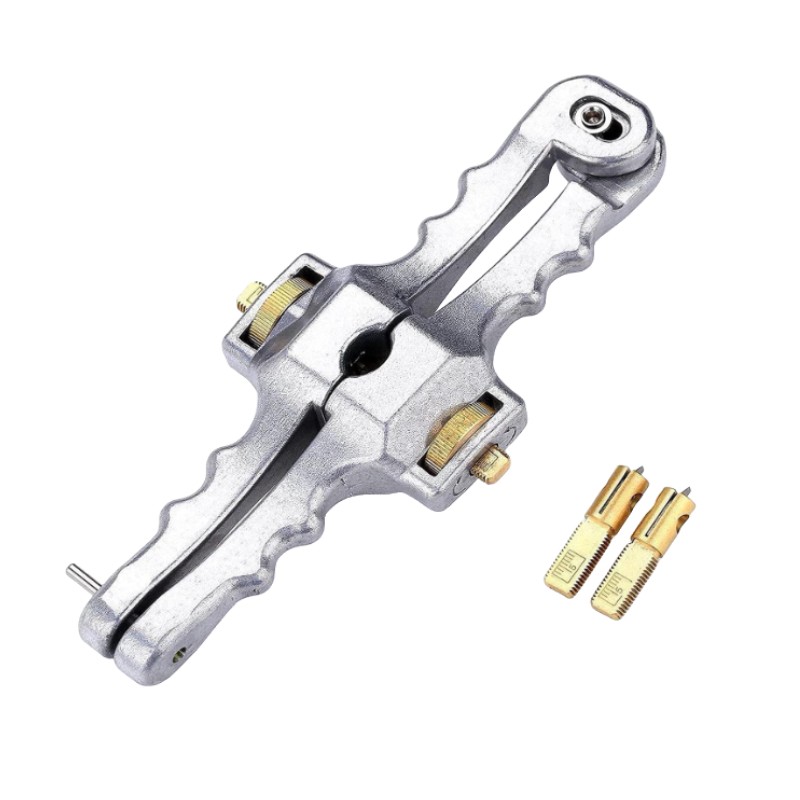
K-SI-01 Longitudinal Cable Stripper
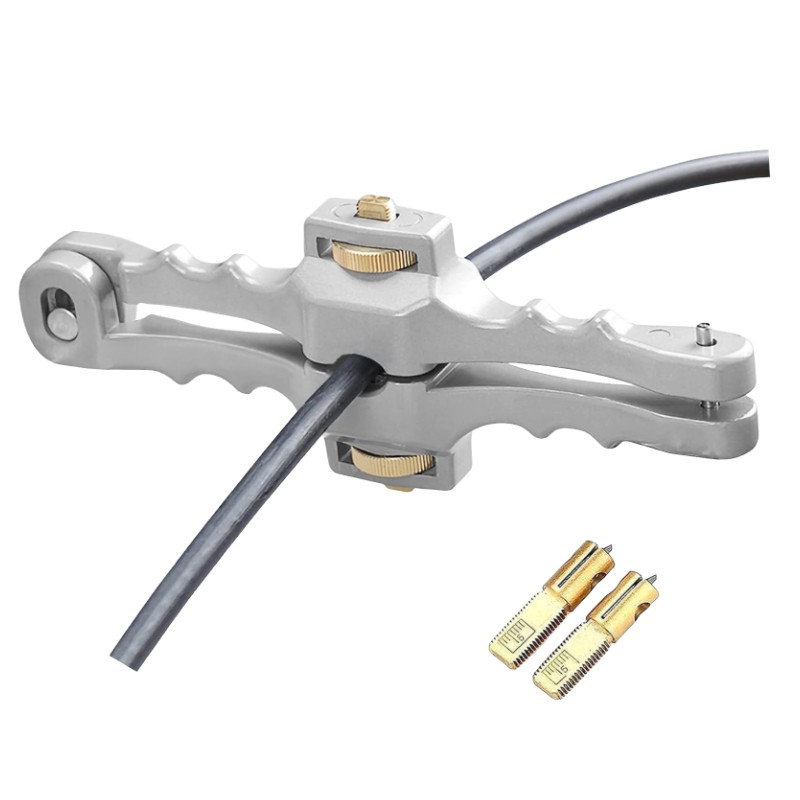
Two opposed blades score the jacket of round cables from 10 to 25 mm while the core stays untouched: set the blade depth to the sheath thickness on the graduated cartridges, close the tool anywhere along the cable, and pull — the jacket parts along the score lines and lifts away from the tubes inside.
Typical work: Longitudinal jacket opening at cable ends; Mid-span window access to the loose tubes inside a round cable; Transverse (ring) cuts for end stripping; Armored and loose-tube cable preparation.
Get a Quote WhatsApp UsNeutral stock in small lots, or private label made to your requirements. Prices on request — EXW factory pricing.
K-SI-01 key features
- Opens the jacket without opening the cable: two opposed blades score the sheath along two lines as the tool is drawn along, so the jacket parts and lifts away — the loose tubes, fibers and strength members inside are never touched by an edge
- Blade depth is set to the sheath, not guessed: the knurled wheels on both faces drive the blade cartridges in and out, and the scale stamped on each cartridge shows the setting — thick armored sheaths and thin PE jackets on the same bench
- Longitudinal cuts on cables from 10 to 25 mm, and transverse ring cuts from 4 to 28 mm with the same blade setup — end stripping and mid-span windows with one tool
- Clamps on anywhere along the cable run: open a window mid-span to reach one tube, or work from the end — no need to thread the cable through anything
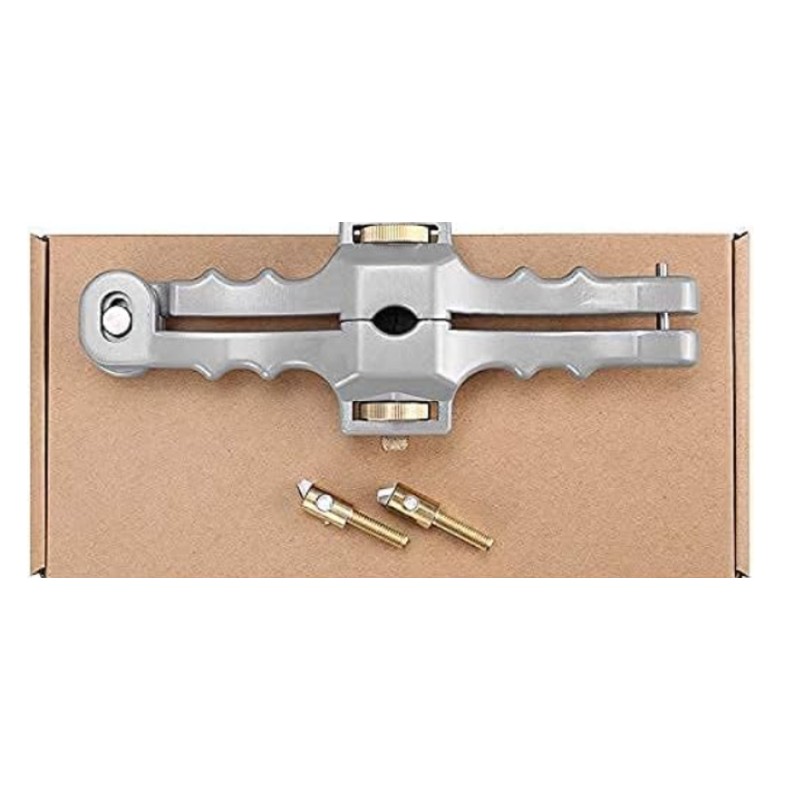
- Replaceable blade cartridges — two spares are included in the box, and a worn blade is swapped in seconds instead of retiring the tool
- Private labeling made to your requirements — labels with your logo, part numbers and barcodes on the inner boxes and outer cartons, ready for your warehouse
K-SI-01 specifications
| Longitudinal range | 10–25 mm cable diameter |
|---|---|
| Transverse range | 4–28 mm cable diameter |
| Cable types | Round fiber optic cables — loose-tube and armored constructions, 2–288 cores; PVC and PE sheaths |
| Blade depth | Set with the knurled wheels on both faces — each wheel drives its blade cartridge in or out, so the blade scores the sheath without reaching the tubes inside |
| Blade cartridges | Two opposed cartridges, replaceable; two spare cartridges included |
| Body material | Cast aluminium alloy, silver finish |
| Dimensions | 208 × 88 × 26 mm |
| Weight | 420 g |
How the K-SI-01 opens a round cable
A round optical cable is built to survive outdoors: a thick polyethylene sheath, often a layer of steel armor or glass yarn, and inside it the loose tubes that carry the fibers. Opening that sheath with a knife means working a blade toward the tubes by feel — one pass too deep and a tube is nicked, and a nicked tube becomes a broken fiber later. The K-SI-01 replaces the feel with a setting: the cable sits in the central channel, two opposed blades enter the jacket from opposite faces, and how far they reach is fixed before the tool ever closes.
Each blade is the tip of a brass cartridge threaded into the tool body. The knurled wheels on the top and bottom faces drive the cartridges in and out, and the scale stamped on each cartridge flat shows the setting. Set the protrusion to the sheath thickness of the cable in front of you — prove it on a scrap end first — then lay the cable in the channel, close the finger-grip bars, and draw the tool along the run. Both blades score the jacket along two lines, top and bottom; the sheath splits along the scores and the two halves lift away, leaving the tubes and armor layers exposed and unmarked. Turn the tool around the cable instead of drawing it, and the same blades make a transverse ring cut to finish an end strip.
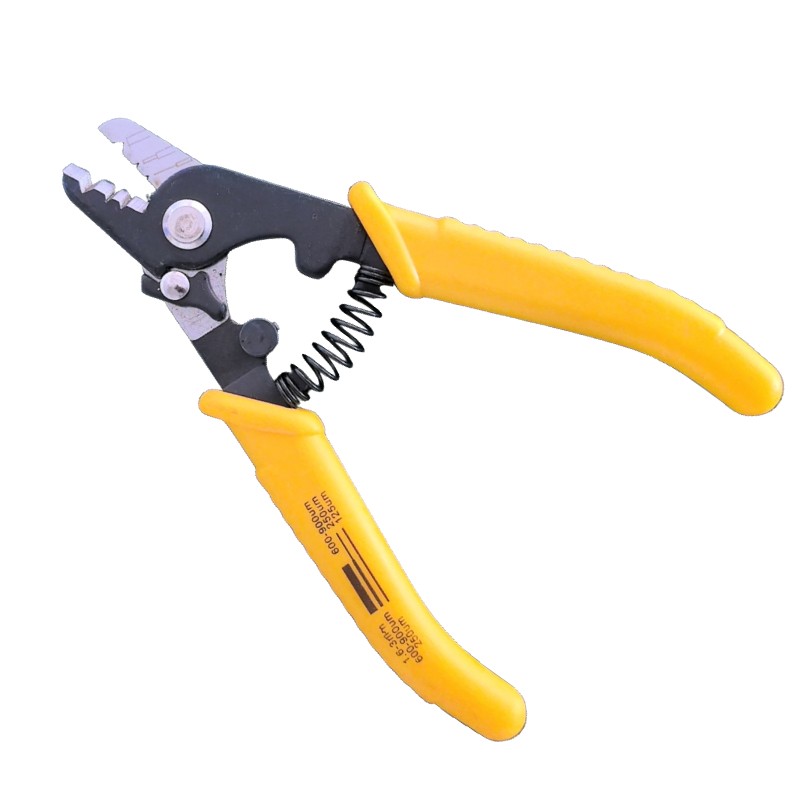
That makes the K-SI-01 the first tool on a round cable: at the end of a run it opens the jacket so the tubes can be fanned into a closure or splice tray; mid-span, it opens a window so one tube can be cut and its fibers spliced while the express tubes pass through untouched. Only once the jacket is off do the finer tools come out — tube strippers, the three-hole stripper for the 250 µm coating, then cleaning and cleaving.
Match the depth to the sheath before every new cable type: armor and thick-walled duct cable want a deeper setting than a thin distribution sheath, and a setting proved on a scrap end costs nothing. Keep both blades at the same setting so the two scores meet the core evenly. When a blade dulls or chips, swap the cartridge — two spares are in the box — rather than pressing harder. Brush sheath shavings out of the channel after a session, and store the tool closed with the blades wound back.
Where the K-SI-01 works
Longitudinal jacket opening at cable ends
Part of the Fiber Strippers range — see the specifications above for the figures that matter on this work.
Mid-span window access to the loose tubes inside a round cable
Part of the Fiber Strippers range — see the specifications above for the figures that matter on this work.
Transverse (ring) cuts for end stripping
Part of the Fiber Strippers range — see the specifications above for the figures that matter on this work.
Armored and loose-tube cable preparation
Part of the Fiber Strippers range — see the specifications above for the figures that matter on this work.
K-SI-01 components
- One K-SI-01 longitudinal cable stripper, with two spare blade cartridges
Documents for this model
Product Catalog 2026 — this model appears in our full-range catalog (PDF), published in the Downloads center.
User manual — if you need the manual for this model now, ask via the inquiry form below or on WhatsApp and we will send the available documents with your quote.
More fiber strippers
Questions about the K-SI-01
How is the blade depth set?
Each blade is the tip of a threaded cartridge, and the knurled wheels on the top and bottom faces drive the cartridges in and out — the scale stamped on the cartridge shows the setting. Set the protrusion to the sheath thickness of the cable you are opening and prove it on a scrap end first: the blades should score the jacket without reaching the loose tubes inside.
Can it open a cable mid-span, not just at the end?
Yes. The tool clamps onto the cable anywhere along the run and draws along it, so you can open a window mid-span to reach one loose tube while the rest of the cable passes through untouched. The same blade setup also makes transverse ring cuts from 4 to 28 mm for end stripping; longitudinal work covers cables from 10 to 25 mm.
Can the K-SI-01 carry our own brand?
Private labeling is made to your requirements and confirmed per order — labels with your logo, part numbers and barcodes on the tools, the inner boxes and the outer cartons, ready for your warehouse. The products most often labeled are the K-35 cleaver, the KS-1 Kevlar shears and the K-870 stripper.
Can we order a small lot, unbranded?
Yes. Neutral stock is held for the core range: small lots are welcome, you can mix models in one shipment, and restock as you sell. Prices are on request — EXW factory pricing.
Ask for a quote — K-SI-01
Tell us the quantity, and whether you want it neutral or with your brand on it.