Wet-to-Dry Fiber End-Face Cleaning
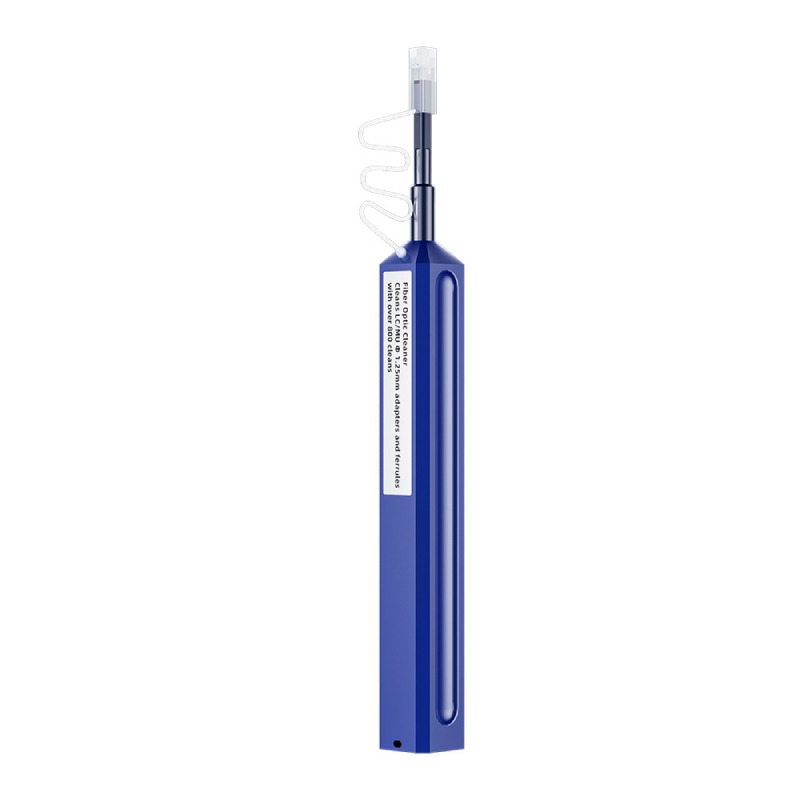
Most "mystery" fiber faults are not broken fiber. They are dirty end faces. Dust, oils from fingers, and residue from the environment sit on a connector ferrule that is only 125 µm across, right where the light-carrying core — a fraction of that width — needs a clear path. The result is high loss, high reflectance, intermittent links that change when a patch lead is touched, and, in the worst case, a contaminated connector damaging the clean connector it is mated to.
Cleaning is therefore a test procedure, not housekeeping: inspect or suspect, clean, then re-check before you mate or measure. This guide covers the wet-to-dry wipe method — the standard bench and field method for stubborn contamination — when to use it, how to do it without making things worse, and the consumables it needs. The products referenced are in fiber cleaning.
Dry first, wet-to-dry when dry is not enough
Good practice is to start with the least aggressive method that works. For light dust, a dry method — a one-click cleaner for connector end faces, or a dry lint-free wipe — is often sufficient and is the fastest option at a patch panel.
Move to wet-to-dry when:
- A dry wipe does not shift the contamination — typically oils, dried residue, or films rather than loose dust.
- Loss or reflectance stays high after dry cleaning.
- The connector has been exposed in a dusty construction environment, or a cap was left off in a cabinet or closure.
Wet-to-dry uses a small amount of cleaning solvent to dissolve what dry wiping only smears, followed immediately by a dry wipe on the same stroke so no solvent or dissolved residue is left to dry on the end face. That second half is the point of the method: a wet wipe left to air-dry can deposit as much contamination as it removed.
What you need
- Lint-free wipes. Kimwipes fiber cleaning wipes are soft, absorbent, low-lint dry wipes supplied 280 pcs/box in a pop-up dispenser box. Low-lint matters: a general tissue or shop towel sheds fibers onto the very surface you are cleaning.
- A wiping surface or fixture. Cleaning against a flat, controlled surface keeps the wipe taut and the ferrule angle correct. The K-WC1 fiber cleaning fixture is a wiping fixture for fiber end-face cleaning, designed to hold the wipe so the end face crosses it evenly.
- Fiber cleaning solvent (where used): a fast-evaporating, fiber-specific solvent, used sparingly — a damp patch, not a soaked wipe.
- Inspection where available: a fiber inspection scope is the only way to be certain. Where no scope is available, verify electrically instead: re-measure loss after cleaning and compare with the reading before.
Keep wipes in their closed dispenser until the moment of use. A wipe that has sat open in a van or on a bench is pre-contaminated and defeats the procedure.
Wet-to-dry, step by step
- Wash and dry your hands, or handle connectors by the body only. Finger oil is one of the contaminants you are removing; do not add more while you work.
- Expose a fresh wipe area on the fixture or flat surface. Never reuse a section of wipe — each pass gets clean material.
- Dampen one small area of the wipe with solvent. The patch should be damp, not wet enough to drip.
- Draw the end face once, in one straight motion, starting on the damp patch and continuing onto the dry area in the same stroke. Keep the ferrule perpendicular to the wipe so the whole end face contacts evenly.
- Do not scrub, circle, or repeat on the same wipe area. Pressing harder and wiping repeatedly grinds particles across the surface instead of lifting them off.
- Inspect or re-measure. If contamination remains, repeat with a fresh wipe area and fresh damp patch. If several wet-to-dry cycles do not clear it, stop and examine more closely — you may be looking at damage, such as a scratch or chip, which cleaning cannot fix.
- Cap or mate immediately. A cleaned connector left uncapped on a bench starts collecting dust again within minutes. Clean, check, connect — in that order, with no gap.
For bare fiber before splicing, the same discipline applies in miniature: wipe the stripped fiber with a wipe lightly dampened with solvent, in one direction, then proceed to cleave promptly. Residue on bare fiber becomes a cleave-quality and splice-loss problem, as covered in how to choose a fiber cleaver.
Common mistakes that make cleaning fail
- Using the same wipe twice. The second pass redeposits what the first pass removed. This is the single most common cause of "cleaning does not work."
- Too much solvent. A flooded wipe leaves residue as it dries. Damp is enough to dissolve films.
- Cleaning only one side of a mated pair. Contamination transfers. Clean both connectors, and consider the adapter or bulkhead as well — its sleeve and the ferrule inside it collect debris too.
- Blowing on the end face or using canned air carelessly. Breath adds moisture and oil. Propellant air can deposit residue and can drive particles rather than remove them if used at the wrong angle or distance.
- Mating to test. Plugging a suspect connector into a known-good port to "see if it works" risks contaminating the good port. Clean first, then mate.
- Assuming new means clean. New patch leads and newly opened connectors can carry manufacturing and packaging residue. Clean new jumpers before installation as a matter of routine, especially before reference or test use.
Cleaning at the panel, in the closure, and in the kit
Different workplaces need the same method in different forms. At a patch panel, one-click and cassette dry cleaners handle volume work quickly, with wet-to-dry reserved for connectors that fail inspection or measurement afterwards. At a splice closure or in the field, a fixture-and-wipes setup is compact, has no mechanism to jam, and covers both connectors and bare fiber. For kit building, that makes wipes and a fixture the baseline cleaning stock: see building an FTTH tool kit for where cleaning sits in a full kit list.
Track consumption honestly. Wipes are a per-job consumable — 280 pcs/box means a box is a planning unit for a crew, not a lifetime supply. If crews run short, they reuse wipes, and the method fails exactly as described above. Stock cleaning consumables like splice sleeves: counted, replenished, and never rationed.
Cleaning checklist
- [ ] Dry method tried first; wet-to-dry used for films, oils, and stubborn residue
- [ ] Fresh wipe area for every pass — no exceptions
- [ ] Solvent patch damp, not soaked; one straight stroke, wet into dry
- [ ] Both sides of a mated pair cleaned; adapter considered
- [ ] Result verified by inspection or by before/after loss measurement
- [ ] Connector capped or mated immediately after cleaning
- [ ] Wipes kept in a closed dispenser and restocked by the box
The short version
Clean dry first. When residue remains, wet-to-dry — one damp-to-dry stroke on fresh wipe material, verified before mating — removes what dry cleaning smears. Most of the method's success is discipline: fresh wipes, little solvent, no re-mating to test, and no cleaned connector left sitting uncapped.
To stock the cleaning bench or top up crew kits with Kimwipes fiber cleaning wipes and the K-WC1 fiber cleaning fixture, send an inquiry via the contact form on this site or message us on WhatsApp at +86 150 6823 2998 and tell us how many crews you are supplying. We will help you size the consumables stock alongside the rest of your fiber cleaning needs.